

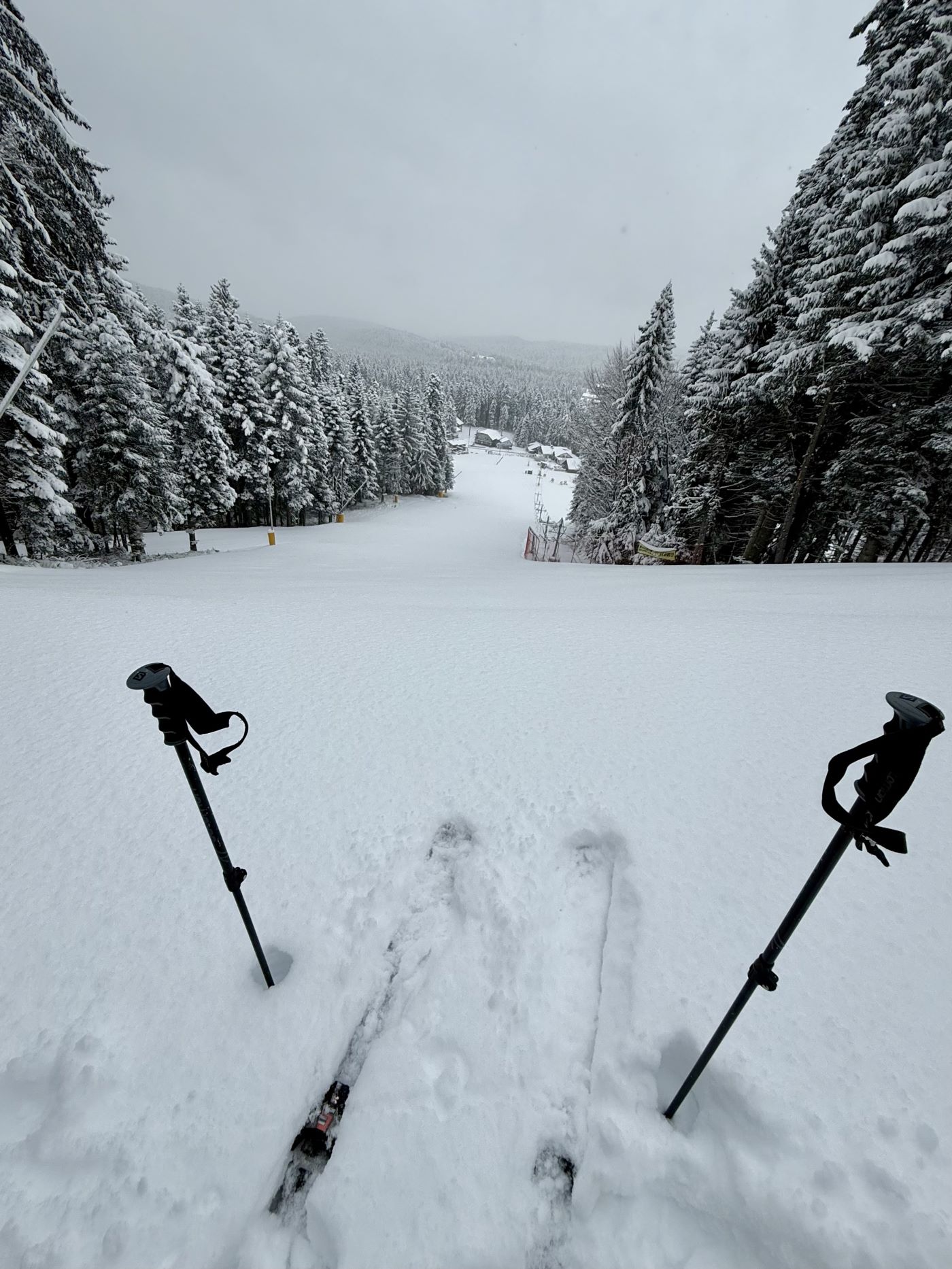

Choosing the right equipment for your skill level and maintaining it regularly in an environment where snow conditions change constantly are essential for your overall experience on the snow. They help you maintain control and stay safe. Whether you are taking your first steps on skis or tackling challenging terrain, your equipment should work with you, not against you.
1. Skis and Boots for Every Skill Level — From Beginners to Experts
Learning to ski requires a gradual approach, with equipment that matches the skier’s current abilities.
Beginners
- What you need: Softer, shorter skis that are more forgiving of mistakes.
- Why it matters: Softer skis bend more easily, making turns easier at lower speeds.
- Boots: Choose boots with a low flex rating, between 70 and 90, for all-day comfort.
Intermediate and Advanced Skiers
- What you need: Medium-stiff skis that provide stability at higher speeds. Ski length should be selected according to the skier’s height and preferred turn size, with skis available in short, medium, and long turn radii.
- Why it matters: These skis offer greater stability on hard-packed snow, ice, and at higher speeds.
- Boots: The stiffness or flex index, should be between 90 and 110 to ensure better transfer of movement and energy from your feet to your skis.
Experts and Professionals
- What you need: Stiff skis with a specific design suited to groomed slopes, deep snow, or terrain parks.
- Why it matters: They provide maximum grip and precision but require excellent technique and advanced skills.
- Boots: Stiff boots (flex 110+) that fit snugly and transfer even the smallest movements directly to the skis.
2. Safety First: Ski Bindings
Properly adjusted ski bindings are essential for your safety. Their settings (DIN values) must be individually adjusted based on:
- Your weight and height
- Your skiing ability
- Your ski boot sole length
Never adjust your bindings yourself unless you know how to do so correctly! If they are too tight, the skis may not release during a fall. If they are too loose, they may release your ski boots at the worst possible moment.
3. Why Is Regular Ski Servicing Absolutely Essential?
A lack of regular servicing significantly reduces the technical performance of skis, regardless of their category or technological advantages. Regular maintenance — at least once at the beginning of the season and after every 4–5 days of intensive skiing — includes two essential tasks:
1. Sharpening the Edges
Over time, metal edges become rounded due to contact with snow, ice, and small stones. This can cause the skis to slide sideways on hard snow and ice, making it more difficult to grip the edges, change direction, and stop.
Regular servicing keeps the edges sharp, ensuring optimal control and stability during descents.
2. Waxing — Improving Glide and Protecting the Base
Without regular waxing, the ski base dries out, turns white, and begins to hold onto the snow. As a result, the skis no longer glide smoothly and may feel as though they are sticking to the snow.
Choosing the right wax reduces friction against the snow, protects the base from drying out, and ensures a smooth, predictable skiing experience.
Suitable equipment and properly serviced skis or snowboards play a major role in the development of both beginner and advanced riders. They not only provide better stability and control on the slopes but also significantly reduce the risk of injury. With the right equipment and regular maintenance, every skier or snowboarder can enjoy winter sports to the fullest and progress much faster.